
Fire Pit Guide: Wood-Burning vs Gas, Built-In vs Portable
Compare wood-burning and gas fire pits, understand safety codes, and choose between built-in and portable options for your outdoor space.
Adding Fire to Your Outdoor Space
A fire pit is one of the most impactful additions you can make to an outdoor living area. It extends the usable season of your backyard by months, creates a natural gathering point for friends and family, and adds a dramatic focal element that elevates the entire space.
The two big decisions are fuel type (wood-burning vs gas) and format (built-in vs portable). Each combination has distinct advantages, and the right choice depends on your local fire codes, maintenance tolerance, and how you plan to use the fire feature.
Wood-Burning Fire Pits
Wood-burning fire pits deliver the full campfire experience — crackling flames, smoky aroma, and the ritual of building and tending a fire. For many people, this authentic experience is the entire point and no gas fire can replicate it.
The downsides are practical. Wood fires produce smoke (which can bother neighbors and drift into your home), sparks (a fire hazard near structures), and ash (which requires regular cleanup). Many municipalities restrict or ban wood-burning fire pits in residential areas, and many HOAs prohibit them entirely.
A quality built-in wood-burning fire pit costs $2,000–$6,000 installed, including the fire ring, surrounding seating wall, and fireproof base. Portable steel fire pits start as low as $100 for basic models and run up to $1,500 for premium designs.
- Pros: authentic experience, no gas line needed, lower cost
- Cons: smoke, sparks, ash cleanup, may be restricted
- Built-in cost: $2,000–$6,000
- Portable cost: $100–$1,500
Get Expert Help
Connect with verified contractors in your area who specialize in this work.
Start ProjectGas Fire Pits
Gas fire pits (natural gas or propane) offer instant on/off convenience, adjustable flame height, no smoke, and no ash cleanup. They're the cleaner, more convenient choice — and they're permitted in most areas where wood-burning fires are restricted.
Natural gas fire pits connect to your home's gas supply, providing unlimited fuel with no tank refills. They require a gas line extension ($500–$2,000) but have zero ongoing fuel costs beyond your gas bill. Propane fire pits use standard 20-lb tanks and are more portable, but tanks need regular refilling ($15–$25 per fill, lasting 8–12 hours of use).
Gas fire pits produce 40,000–65,000 BTUs for residential models, providing genuine warmth in a 10–15 foot radius. They're available with fire glass, lava rock, or ceramic log media that create different visual effects.
Pro Tip
If running a natural gas line, have it sized for at least 100,000 BTU capacity — even if your current fire pit needs less. This gives you room to upgrade later without replacing the gas line.
Built-In vs Portable
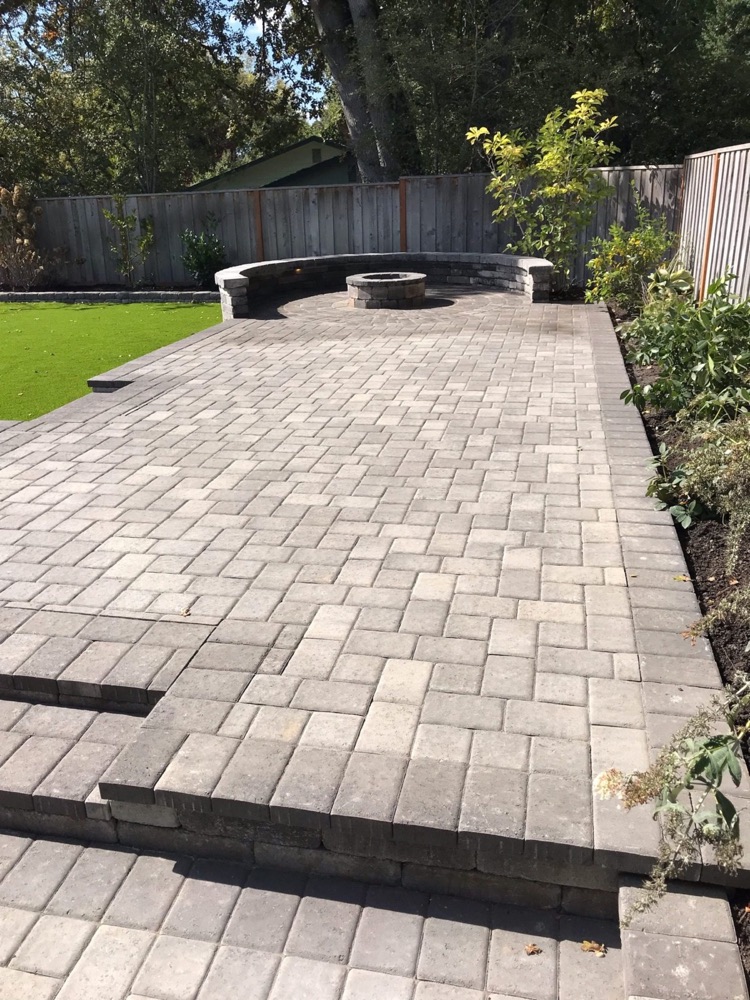
Built-in fire pits are permanent structures integrated into your patio design. They typically feature a stone, block, or concrete surround with a fire ring insert. Built-in pits look polished and custom, add the most value to your home, and can incorporate seating walls, cooking grates, and decorative elements.
Portable fire pits offer flexibility — you can move them, store them in winter, and take them with you if you move. They're also the budget-friendly choice, with good options available for $200–$800. However, they lack the custom, integrated look of a built-in feature.
A good middle ground is a semi-permanent installation: a pre-fabricated fire pit kit that sits on your patio and looks built-in but can technically be disassembled. These kits cost $1,000–$3,000 and include everything needed for installation.
Ready to Start Your Project?
Get free, no-obligation quotes from top-rated hardscaping professionals near you.
Get Free QuotesSizing & Placement
Fire pit diameter typically ranges from 36 to 48 inches for residential use. A 36-inch pit is intimate and suits smaller patios. A 44–48 inch pit accommodates larger groups and produces more heat. Allow at least 7 feet of clearance from the fire pit edge to any combustible material, structure, or property line.
Place your fire pit where prevailing winds won't blow smoke toward your house or neighbors. Consider the view lines — a fire pit at the far end of a patio creates a destination and draws people deeper into the outdoor space. A fire pit near the house feels more accessible but may push smoke indoors.
The surface beneath a fire pit must be non-combustible. Pavers, concrete, stone, and fire-rated gravel are acceptable. Wood decks are NOT safe for fire pits unless a fireproof pad and proper clearance are used — and even then, check with your local fire code.
Fire Codes & Safety
Fire codes for residential fire pits vary significantly by jurisdiction. Common requirements include minimum distances from structures (10–25 feet), maximum fire size limitations, fuel type restrictions, and hours-of-use limits. Many areas require a fire pit permit ($50–$200).
Always check with your local fire department AND your HOA before building or installing a fire pit. Even if local fire code permits it, your HOA may have additional restrictions. Getting caught with an unpermitted fire feature can result in fines, removal orders, and insurance complications.
Safety essentials: keep a fire extinguisher or garden hose nearby, never leave a fire unattended, use a spark screen on wood-burning pits, and ensure children are supervised at all times. For gas fire pits, install a key valve or electronic ignition that prevents unauthorized use.
- Check local fire codes AND HOA rules before building
- Minimum clearance: 10–25 feet from structures
- Keep fire extinguisher or hose accessible
- Use spark screen on wood-burning pits
- Never leave fire unattended

Have more questions about Outdoor Living?
Get free quotes from verified hardscaping professionals in your area.
Start Project