
Pool Deck Resurfacing: When to Repair vs Replace
Understand your resurfacing options, compare overlay vs full replacement costs, and learn the warning signs that your pool deck needs attention.
Is It Time to Resurface?
Pool deck surfaces don't last forever. Sun, water, chemicals, and freeze-thaw cycles gradually degrade even the best materials. The question isn't whether your deck will eventually need work — it's whether you should repair, resurface, or do a full replacement.
Resurfacing is often the most cost-effective option, running 30–50% less than a full tear-out and replacement. But it's not always the right call. Understanding when resurfacing works — and when it doesn't — can save you thousands of dollars and years of frustration.
Warning Signs Your Deck Needs Work
The most obvious signs are visual: widespread cracking, spalling (surface flaking), large stains that won't clean up, and significant color fading. Minor cosmetic issues can often wait, but structural problems should be addressed promptly before they worsen.
Safety issues demand immediate attention. If your deck surface has become slippery when wet, if drainage has changed causing standing water, or if sections have heaved or sunken creating trip hazards, these are urgent problems that affect everyone using the pool area.
A good rule of thumb: if more than 25% of your deck surface shows visible damage, resurfacing is likely more cost-effective than patching. If the base material is structurally sound, an overlay is usually the best approach.
- Widespread spider-web cracking
- Surface spalling or flaking
- Standing water or drainage problems
- Uneven surfaces or heaved sections
- Slippery surface when wet
- Faded color that cleaning won't fix
Get Expert Help
Connect with verified contractors in your area who specialize in this work.
Start ProjectOverlay & Resurfacing Options
Concrete overlays are the most popular resurfacing method. A thin layer (typically 1/4 to 3/8 inch) of polymer-modified concrete is applied over the existing surface, then textured and colored. This creates essentially a new surface without the cost and disruption of tear-out.
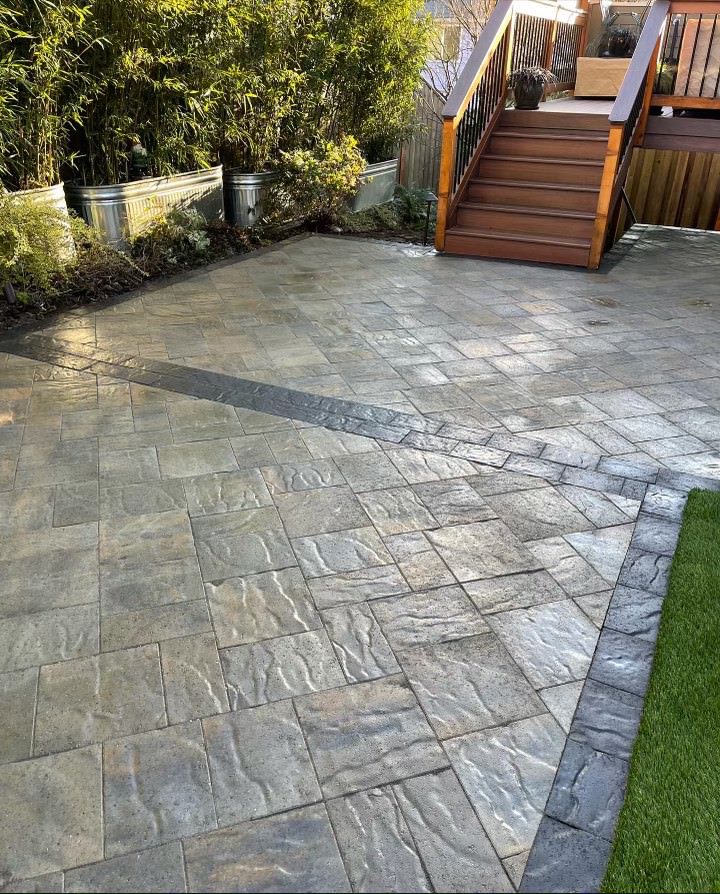
Paver overlays are another option. Thin pavers (typically 1 inch thick instead of the standard 2-3/8 inches) can be laid directly over a sound concrete deck, creating a completely new look. This approach costs more than a concrete overlay but provides the durability and aesthetics of real pavers.
Spray-texture coatings (like Kool Deck or similar products) apply a thin cementitious coating that can be colored and textured. These are the most affordable resurfacing option at $3–$6 per square foot, but they're also the least durable, typically lasting 5–10 years before needing reapplication.
Pro Tip
Before committing to an overlay, have the existing surface tested for soundness. Tap the concrete with a hammer — a hollow sound indicates delamination, which means an overlay won't bond properly and full replacement may be necessary.
When Full Replacement Is Necessary
Full replacement is necessary when the existing base material is structurally compromised. Deep cracks that penetrate through the full depth of the concrete, significant settling or heaving caused by poor subgrade preparation, and extensive water damage from failed drainage are all indicators that resurfacing alone won't solve the problem.
If your existing deck was built without proper base preparation — inadequate compacted gravel, missing drainage, or insufficient concrete thickness — no amount of resurfacing will fix the underlying issues. In these cases, removal and proper reconstruction is the only lasting solution.
Full replacement costs $15–$30 per square foot including demolition and disposal. While more expensive upfront, it allows you to upgrade the base preparation, install proper drainage, and choose premium materials that will perform for decades.
Ready to Start Your Project?
Get free, no-obligation quotes from top-rated hardscaping professionals near you.
Get Free QuotesCost Comparison
Concrete overlay resurfacing: $4–$10 per square foot. Paver overlay: $8–$15 per square foot. Spray-texture coating: $3–$6 per square foot. Full tear-out and replacement with pavers: $15–$30 per square foot.
For a typical 600 sq ft pool deck, that translates to: overlay resurfacing at $2,400–$6,000, paver overlay at $4,800–$9,000, or full replacement at $9,000–$18,000. The right choice depends on the condition of your existing surface and your long-term plans.
Keep in mind that the cheapest option isn't always the best value. A spray-texture coating that needs redoing in 7 years costs more over 20 years than a paver overlay that lasts 30+.
Finding the Right Contractor
Pool deck work requires specialized experience. Not every hardscaping contractor does pool deck resurfacing, and not every concrete contractor understands the specific requirements of pool environments — slip resistance, chemical resistance, drainage, and coping integration.
Ask for references specifically from pool deck projects, not just general patio work. Request to see completed projects that are at least 2–3 years old, so you can evaluate how the work has held up over time. Any contractor confident in their work will be happy to provide these references.
Pro Tip
Get at least three written quotes that include material specifications, surface preparation method, warranty terms, and a project timeline. Be wary of quotes that are significantly lower than others — they often cut corners on base preparation.
Have more questions about Pool Decks?
Get free quotes from verified hardscaping professionals in your area.
Start Project