
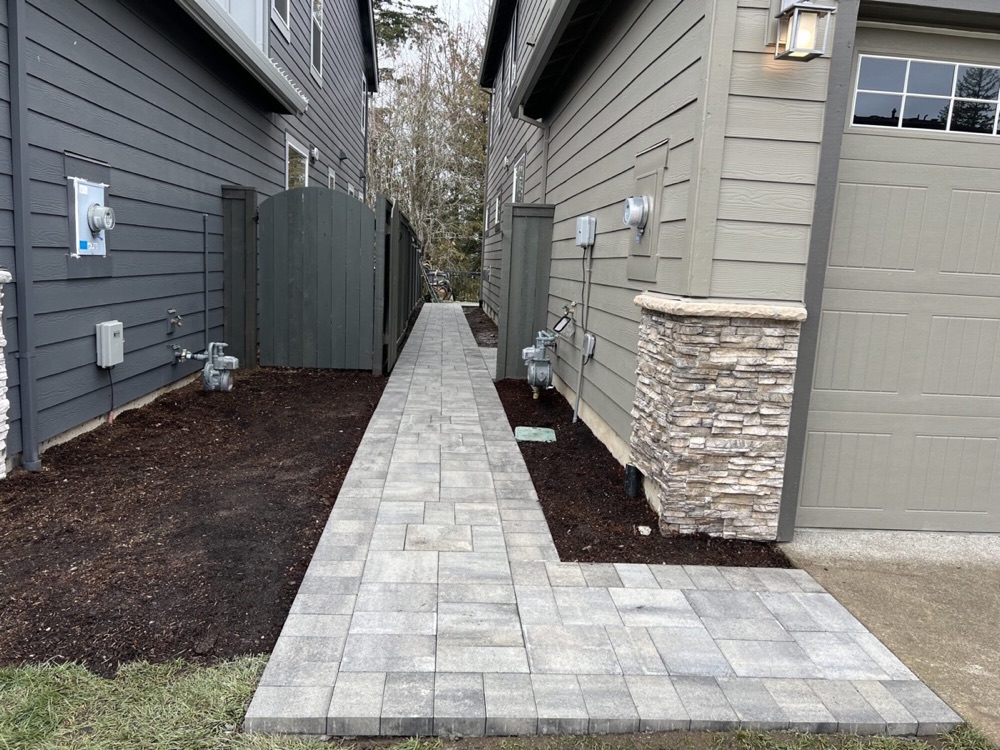
Driveway Paver Patterns That Boost Curb Appeal
Discover the best paver patterns for driveways with tips on structural performance, visual impact, and material pairings.
Pattern Matters More on Driveways
Pattern selection for driveways is more constrained than for patios because structural performance matters as much as aesthetics. Vehicle weight — even a standard car at 4,000 pounds concentrated on four small tire contact patches — creates forces that can shift and rut pavers if the pattern doesn't provide adequate interlock.
The good news is that the strongest patterns also happen to look great. Herringbone, the gold standard for driveway interlock, is one of the most visually appealing patterns available. You don't have to sacrifice beauty for strength.
Herringbone: The Gold Standard
45-degree herringbone is the only pattern recommended by the ICPI (Interlocking Concrete Pavement Institute) for vehicular traffic. The zigzag arrangement creates mechanical interlock in all directions, distributing vehicle weight across multiple pavers and preventing the creep and rutting that plagues weaker patterns.
For driveways, use 45-degree herringbone for maximum strength. The 90-degree version is acceptable for residential driveways with normal passenger vehicle traffic but isn't recommended for areas that will see heavy vehicles like delivery trucks or RVs.
Material waste with herringbone runs 8–12% due to the angled cuts needed at borders. Your contractor should include this waste factor in their material estimate. The extra cost is insignificant compared to the structural benefits.
Pro Tip
If your contractor suggests running bond or stack bond for a driveway, find a different contractor. These patterns do not provide adequate interlock for vehicular traffic and will develop ruts and shifting within a few years.
Get Expert Help
Connect with verified contractors in your area who specialize in this work.
Start ProjectRunning Bond for Light-Duty Driveways
Running bond can work for residential driveways that only see passenger car traffic, but it provides significantly less interlock than herringbone. If you prefer the simpler running bond look, run the pattern perpendicular to the direction of traffic — this provides more resistance to the forces that cause creep.
A diagonal running bond (45-degree angle) provides better interlock than straight running bond and adds visual interest. It's a reasonable compromise between the structural performance of herringbone and the simpler aesthetic of running bond.
Running bond generates less waste (2–5%) and is faster to install than herringbone, which can translate to modest labor savings. However, for most driveways, the structural benefits of herringbone far outweigh the small cost savings of running bond.
Borders & Accent Details
A contrasting border instantly elevates a driveway's appearance. The most common approach is a soldier course border — pavers turned 90 degrees to the field pattern — in a darker or complementary color. This creates a frame effect that makes the entire driveway look more designed and intentional.
Double borders (two rows of contrasting pavers) create an even more premium look. Some homeowners add a center strip or diamond accent at key focal points, such as the approach to the garage or a turnaround area.
Borders add $2–$5 per linear foot to the project cost. For a typical 60-foot-long driveway with borders on both sides, that's $240–$600 — a modest investment for a significant visual upgrade.
Pro Tip
Choose a border color that contrasts with but complements your field pavers. A charcoal border with tan field pavers is a classic combination. Avoid borders that match the field too closely — the whole point is visual definition.
Ready to Start Your Project?
Get free, no-obligation quotes from top-rated hardscaping professionals near you.
Get Free QuotesFan & Cobblestone Patterns
Fan patterns (also called European fan or cobblestone arc) create an old-world aesthetic that's particularly stunning on driveways approaching historic or European-style homes. The arcing rows of small pavers radiate outward from fixed points, creating a dynamic, flowing appearance.
However, fan patterns provide less interlock than herringbone and require highly skilled installation. They're best used in combination with herringbone — for example, a fan pattern in the apron or turnaround area with herringbone in the main driving lanes.
Fan patterns generate 15–20% material waste and take significantly longer to install than standard patterns. Budget 30–50% more for labor compared to a straight herringbone installation.
Material Pairing Tips
For driveways, standard-thickness pavers (2-3/8 inches or 60mm) are the minimum. Some manufacturers offer extra-thick driveway pavers (3-1/8 inches or 80mm) for added durability, though standard thickness with proper base preparation handles normal residential traffic without issues.
Stick with rectangular pavers for driveway fields — they provide the best interlock in herringbone and running bond patterns. Save specialty shapes (circles, hexagons, irregular) for accent areas where structural interlock isn't critical.
Color choice matters for maintenance visibility. Very light pavers show tire marks and oil stains more readily than medium or dark tones. A medium gray, tan, or multi-blend paver hides everyday wear better than solid white or cream.
Have more questions about Driveways?
Get free quotes from verified hardscaping professionals in your area.
Start Project