
Paver Driveway vs Concrete: Cost, Durability & Appearance Compared
A comprehensive head-to-head comparison of paver and concrete driveways covering upfront cost, long-term value, maintenance, and curb appeal.
The Big Decision: Pavers or Concrete?
This is the most common question homeowners ask when planning a driveway project. Both materials have loyal advocates, and both can deliver excellent results when properly installed. The right choice depends on your budget, aesthetic preferences, climate, and how much maintenance you're willing to do.
Here's the honest truth: concrete costs less upfront, but pavers cost less over a 30-year lifetime because they're repairable. Pavers look better but require more maintenance. Concrete is simpler but cracks are permanent. Let's break down each factor so you can decide what matters most to you.
Upfront Cost Comparison
A standard poured concrete driveway costs $6–$12 per square foot installed, depending on thickness, finish, and region. A two-car driveway (approximately 600 sq ft) runs $3,600–$7,200.
A paver driveway costs $12–$25 per square foot installed, or $7,200–$15,000 for the same 600 sq ft driveway. Pavers cost roughly 2x more upfront — there's no getting around this.
However, stamped or colored concrete narrows the gap significantly. A decorative concrete driveway with coloring, stamping, and sealing costs $10–$18 per square foot — close to the lower end of paver pricing.
Pro Tip
When comparing quotes, make sure both include the same base preparation. A properly built paver driveway requires 6–8 inches of compacted aggregate base, which represents a significant portion of the total cost.
Get Expert Help
Connect with verified contractors in your area who specialize in this work.
Start ProjectLong-Term Durability
Concrete driveways typically last 25–30 years before needing replacement. The primary failure mode is cracking — caused by ground movement, tree roots, freeze-thaw cycles, and settling. Once concrete cracks, the only real fix is removal and replacement of the affected section, which rarely matches the original in color.
Paver driveways can last 50+ years because individual pavers can be removed and replaced without affecting the surrounding area. If a paver settles, you lift it, add sand, and reset it. If a paver cracks, you pop it out and drop in a new one. This repairability is the single biggest advantage of pavers.
In freeze-thaw climates, pavers have a clear edge. The joints between pavers allow the surface to flex slightly with ground movement, absorbing forces that would crack a rigid concrete slab. This flexibility is why pavers are the preferred driveway material in cold-climate regions.
Maintenance Requirements
Concrete driveways require very little ongoing maintenance — occasional cleaning and resealing every 3–5 years. However, when problems do occur (cracking, spalling, settling), the repairs are expensive and often unsightly.
Paver driveways require more regular maintenance: annual joint sand inspection and top-up, periodic sealing (every 2–4 years), and occasional weed removal. These tasks are straightforward and inexpensive, but they are ongoing.
A fair comparison: concrete requires less maintenance in years 1–15, but pavers require less maintenance over the full 30+ year lifespan because the periodic upkeep prevents the catastrophic failures that concrete is prone to.
Ready to Start Your Project?
Get free, no-obligation quotes from top-rated hardscaping professionals near you.
Get Free QuotesAesthetics & Curb Appeal
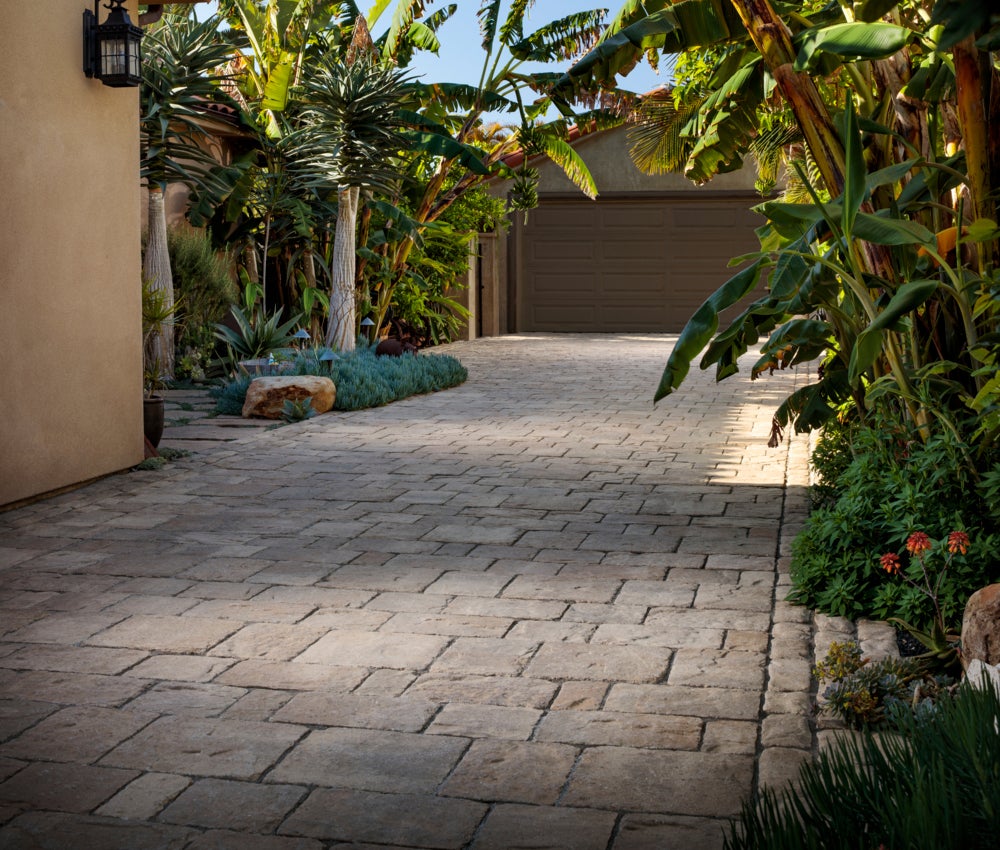
Pavers offer dramatically more design options than concrete. Dozens of colors, shapes, patterns, and textures are available, and you can mix and match to create borders, inlays, and custom designs. A well-designed paver driveway consistently ranks as one of the top curb appeal improvements in real estate studies.
Concrete can be colored, stamped, and textured to mimic stone or brick, but the results depend heavily on the contractor's skill. Poorly executed stamped concrete can look artificial and dated, while plain gray concrete — while functional — does nothing for curb appeal.
One aesthetic factor many people overlook: aging. Pavers tend to age gracefully, developing a natural patina that many people find appealing. Concrete tends to age poorly — it stains, discolors, and develops cracks that are visible and permanent.
Impact on Resale Value
Both materials add value to your home, but pavers consistently outperform concrete in real estate assessments. According to industry studies, a paver driveway can recoup 70–80% of its cost at resale, compared to 50–60% for a standard concrete driveway.
Real estate agents frequently cite paver driveways as a significant selling feature, particularly in competitive markets. The visual impact of a well-designed paver driveway creates a strong first impression that influences buyer perception of the entire property.
The resale advantage is even stronger in markets where paver driveways are less common. In neighborhoods of concrete driveways, a paver driveway stands out and creates perceived value that exceeds the actual cost difference.
Need Professional Advice?
Speak directly with experienced hardscapers who can bring your vision to life.
Find a ProThe Verdict
Choose concrete if: you're on a tight budget, you want minimal maintenance, and you're in a mild climate without significant freeze-thaw cycles.
Choose pavers if: you value curb appeal, you want a surface that's repairable and will last 50+ years, you're in a cold climate, or you plan to stay in your home long enough to recoup the higher upfront investment.
For most homeowners who plan to stay in their home 10+ years, pavers are the better long-term investment despite the higher upfront cost. The repairability, aesthetics, and longevity typically offset the price premium within 15–20 years.
Have more questions about Driveways?
Get free quotes from verified hardscaping professionals in your area.
Start Project